The Hall of Fame Cube: Beaten Black and Blue (Dimir)
You can find the current iteration of the Hall of Fame Cube at https://cubecobra.com/cube/list/HallOfFameCube
For our previous breakdown of the Azorius archetype, you can go to https://readthesebones.blogspot.com/2026/03/the-hall-of-fame-cube-white-stripes-and.html
Beaten Black and Blue
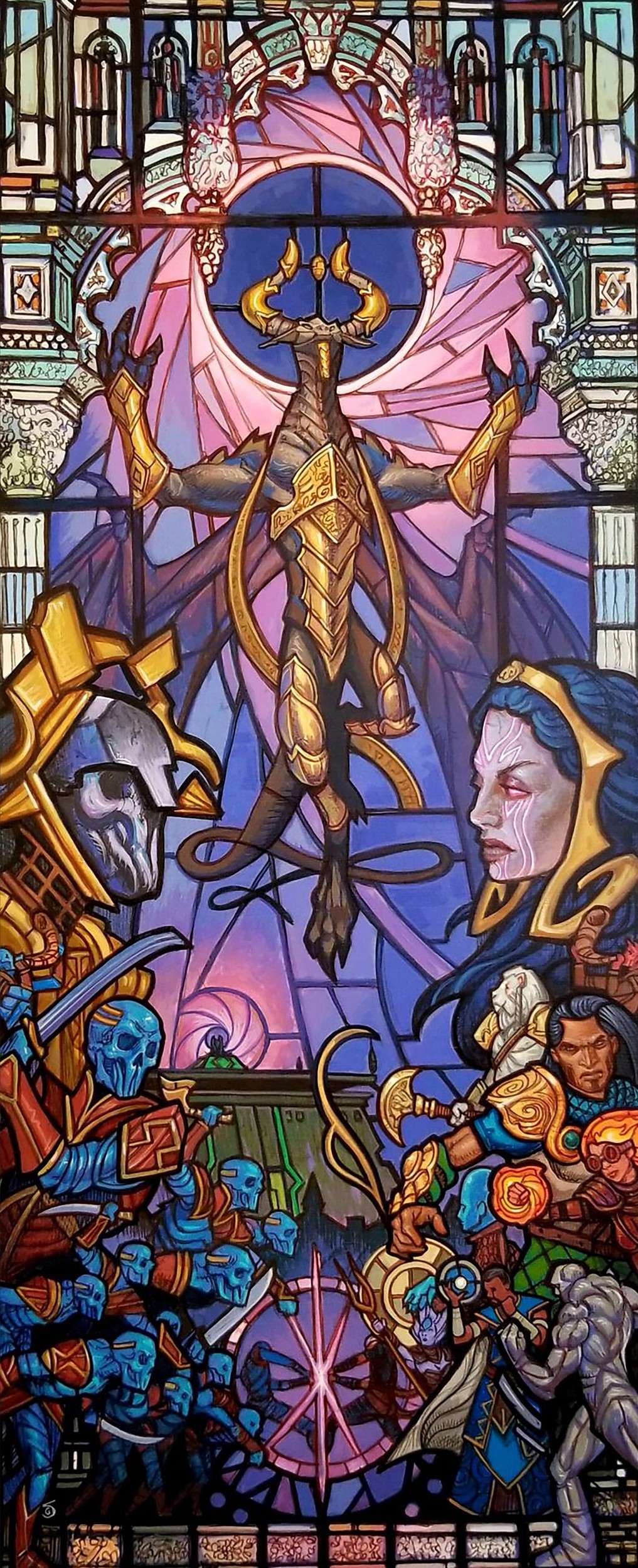
War of the Spark, Chris Seamen
Welcome back to the Hall of Fame Cube, where we dive into a short history of each Magic color-pairings best showing in limited formats of the modern era. If you didn't see last-time's delve into the Azorius, you can find the links to both that and the current CubeCobra listing of the cube in the links above.
Today we tackle, in one of the hardest decisions we may see, the Dimir. The sneaky and sly operatives of the Dimir have had their hand in throwing many a wrench into Magic limited formats, and we have two very strong contenders to tackle for who will represent their guild in the Hall of the most dominant.
The Data

Once again we have the data available from 17lands for your viewing pleasure. On the horizontal axis we have each Dimir archetypes winrate per set, and on the vertical we have the Win Delta, where being above 0% means you were the best performing archetype in your set. Anything below means you weren't and the lower you are on the graph, the higher the difference was between you and the best performer. Additionally, you can also see the positive correlation between the two statistics, which makes a lot of sense. The more games you win on average, the better you tend to perform against the field in your set.
This data set reveals to us a few things that will help us in our determination of the best set, as well as some other interesting anecdotes. For example, way below at the bottom, we can see the Kaldheim Dimir lists were putrid. We're looking at both a not-even-close-to-breaking-even winrate at 47.1%, as well as, as we should probably suspect, a by far the worst win delta at -11.3%. Both of these are by far the worst we've seen in each statistic we've seen thus far.

In basically a direct counter to what we're looking for, Kaldheim Dimir was one of the worst of the worst. Usually there are several factors in making an archetype bad that mimic what makes them good. Good archetypes have format warping bomb mythics and rares that can almost single handedly push you into their colors, good answers to the formats other main strategies and bombs, and good matchups against the other formats color combos. Dimir in Kaldheim had almost none of that.
Of the format's 35 multicolor cards, all three Dimir options ranked in the bottom 10, with the best performer, The Trickster God's Heist, at 25th. It also didn't help that black was by far the worst color of the five in the format, which the data back up. Of the archetypes with at least 10,000 games registered to 17 lands, black's highest performer was Golgari in 6th place with a 55.5% winrate. Golgari's access to an Elf-typal shell, a tried and true black/green archetype with powerful cards like Elvish Warmaster to play with, alongside access to arguably the format's strongest color in green allowed it to shoot further up the leaderboard then its other Black/X brethren could muster.
It would seem that drafters also ascertained the weakness of Dimir in this set, as it was the least registered archetype on 17lands by nearly 5000 decks, sitting at 16,126 at the time of writing. For reference, Boros, tied for the highest winrate archetype in the set, sits at 84,177 registered decks, over 5 times more than that of Dimir.
Back to the Good
But that's enough harping on the worst, we're here for the best, and once again we have a decision to make regarding who should represent that for the Dimir. Looking back at our data sheet we are once again presented with two contenders who sit above a 0% win delta. Kamigawa Neon Dynasty's Dimir Ninja's sit alongside War of the Spark's Dimir Amass as the two highest performers of the color pair.
The interesting thing about this decision is that we now have multiple different new axes to consider our choices along that were not available to us just starting out. One is the opinion of those who have responded and commented to this cube's archetypes so far, and several have put in their favor for NEO Dimir to be the representative. Another line is how we should consider synergy with archetypes already in our cube. Both NEO and THB had a lot of enchantment focus, so by putting those two together we can present drafters with a very strong blue enchantment package that can go multiple different directions.
To me, both of these are good things. Synergy like that makes for more interesting drafts and decision making, and feedback is always important, but we must also consider the numbers importantly within our rankings. WAR sits a bit further back on the timeline of 17lands, so it sadly doesn't have the sample size numbers that NEO has, but it does have both the highest Win Delta at 1.3%, an interesting design, and the backup of the opinion from Magic community members who have spoken to it's dominance. Therefore, a deeper look into both of these sets will help illuminate the right choice for our cube, as well as enlighten us to interesting design philosophies that have made Dimir one of the more flexible color pairings in limited over the past decade.
Neon Dynasty's Dimir Ninjutsu
Kamigawa: Neon Dynasty, released in early 2022, is remembered fondly by limited players as a format filled with engaging gameplay and a uniquely interactive and tense draft environment. Many voices in the magic community proclaimed it to be a well-above average limited set, with its name several times in the answers to what players favorite limited set was.
The mark of a good limited environment, at least in the data, is the lack of extreme power outliers warping a color pairs winrates to far beyond that of its brethren, and the data shows that for Neon Dynasty. Of the 14 archetypes with at least 10,000 registered games on 17lands, we only see a disparity of 5.4% in winrate between the worst performing and top performing archetypes; a far cry from the extreme power outlier the Dimir had in Kaldheim, nearly doubling that disparity to 10.6%.
But that doesn't mean that the format was without its faults. By the time NEO was fully fleshed out by drafters and Magic limited shows like Limited Resources and Lords of Limited were releasing their wrap-up and sunset shows, it was very clear that red was the weakest color in the format, for a few different reasons.
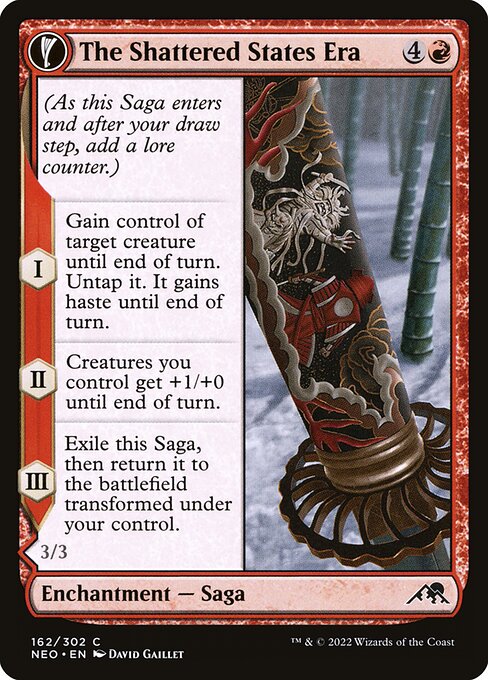
One was that the format was dominated by the sagas. Flipping into creatures in their third chapter essentially made them 2 pieces of material in 1, and in a format that Lords of Limited pointed out was essentially dominated by 2-for-1s, these were some of the best value cards to pick up. Red was probably the weakest color in this regard, Fable of the Mirror Breaker was obviously insane but stuck in the rare slot, Kumano Faces Kakazan was great for the pure-red aggro decks, but The Shattered States Era left something to be desired.
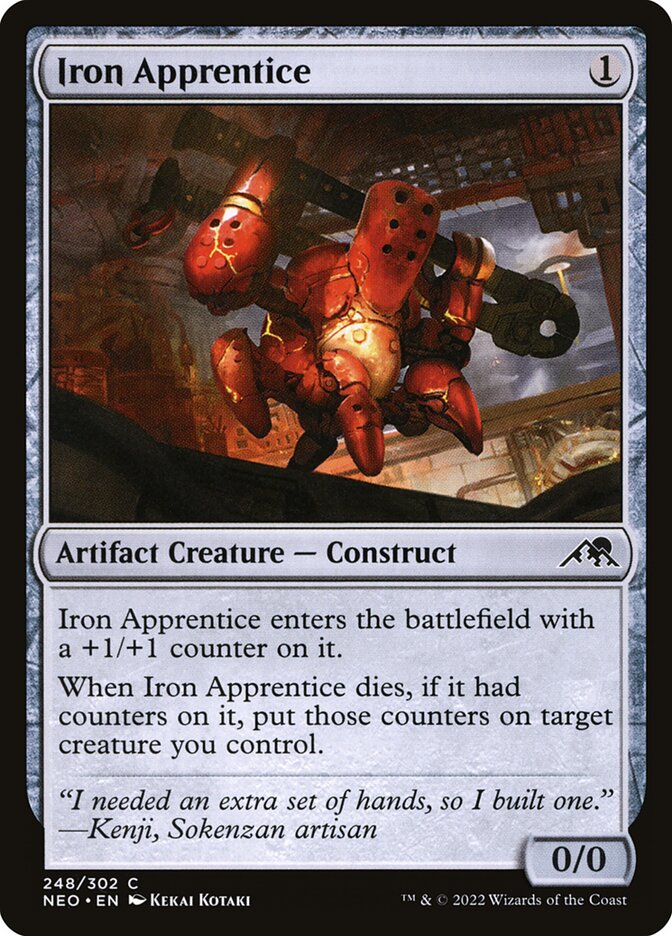
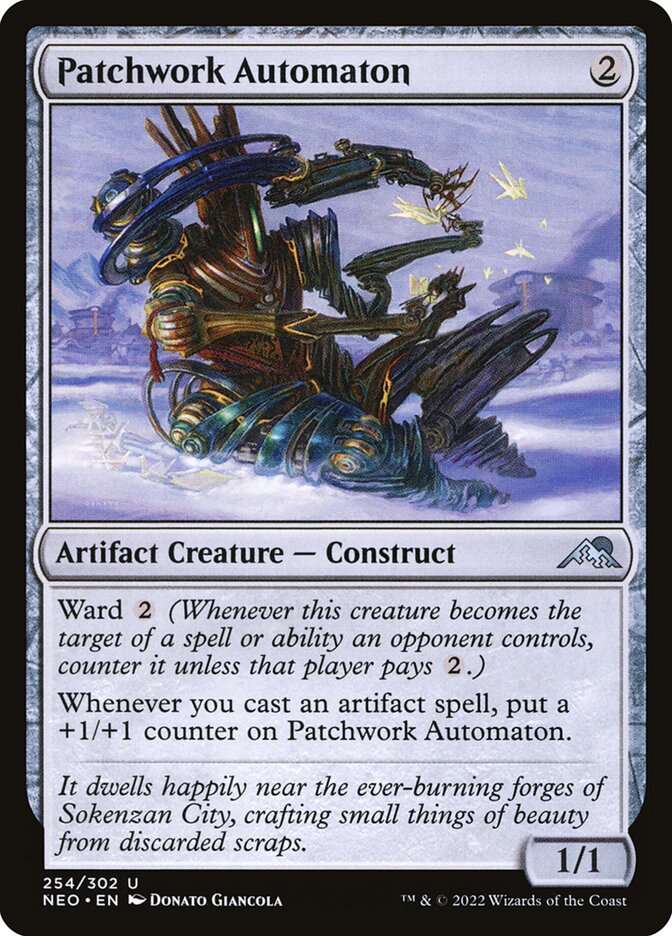
Another reason was that red basically only saw high performance when drafted basically by itself. Two of its other color-pairs in Boros Samurais and Gruul Modified were not the place you wanted to be in the draft. Players saw most success from sticking to a super-low curve mono-red aggro plan that featured a very-high density of 1 and 2-drops, hopefully bolstered by powerful colorless options such as Iron Apprentice and Patchwork Automaton. These decks hoped to sweep the game out from under saga-heavy decks that would out resource and value them in the long term.
It's stats like these that make it important to not 100% adhere to the numbers from 17lands. Mono-Red looks just from the deck archetype winrates as an uber dominant force in the field, but putting together a red deck that actually looked like this required an extremely open lane, and many drafters trying to tunnel-vision into that space were often left a few cards short with their picks snipped away from drafters in Izzet and Rakdos. The deeper data also points towards this Mono-Red deck maybe being more of a pipe-dream. Of the top 25 commons and uncommons in the set by in-hand winrate, red only landed 3 and 2 cards respectively, a well below the bar 10% of the field.
For many of the same reasons that red fell short, Dimir ninjas was thriving. It, to put it short, had a great position in the Neon Dynasty limited meta.
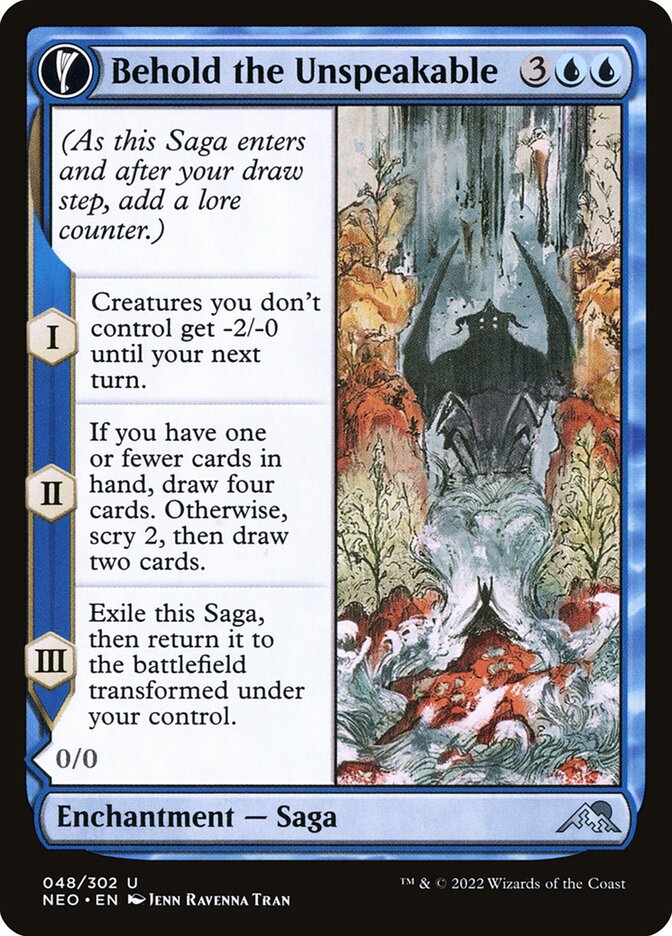
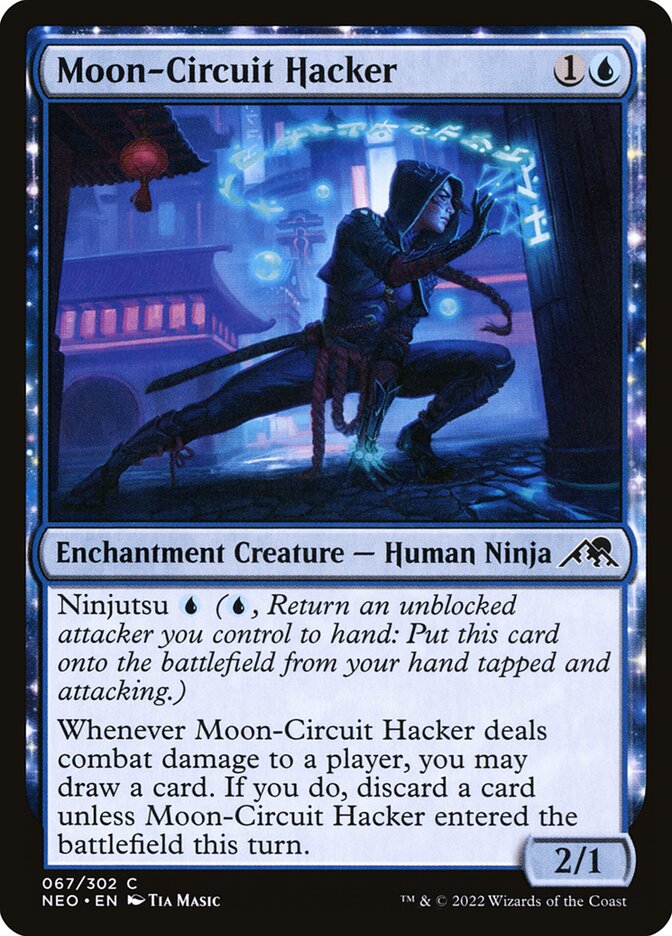
For a start, the color pair was flexible enough to play both the aggro role and the long game depending on how the draft went. In the long game scenarios, they had access to two of the best, if not the best, uncommon Sagas in Life of Toshiro Umezawa and Behold the Unspeakable, both of which provided great board interaction and legitimate threats on the backside once they transformed. In the aggro role, Network Disruptor on Turn 1 into pauper all-star Moon-Circuit Hacker on 2 bouncing Disruptor back to hand was maybe the best 1-2 punch in the entire format.
But what really put Dimir over the combat was the tension you could force your opponent into on the blocking phase. Say your opponents drops a turn 2 Virus Beetle to force a discard from you, already a good enough play most decks would be happy with, but nothing unbeatable. You cast a Bearer of Memory, a 3/2 to stonewall the 1/1 Beetle and set up some of your enchantment synergies later. On turn 3 however, your opponent attacks with full mana up. It's immediate that something fishy is going on, but what's the right way to approach it?
If you don't block, you open up your opponent to ninjutsuing in on curve devastating options like a Biting-Palm Ninja or, more likely, a Moonsnare Specialist to set you back even further, while also bouncing the Beetle back to hand to discard you again. If you do block, you're probably happy about throwing their ninjutsu plan off the rails, but thats not the only trick up the ninja's sleeves. How about a You Are Already Dead post combat to pick off your blocker and replace itself? Or a Return to Action to gain 2 life, trade, and still keep the Beetle? Or devastatingly a Suit Up, to both win the trade cleanly and replace itself in your hand for the trouble?
These were the tensions that made Dimir feared in Neon Dynasty. It became so potent that Limited Resources essentially called Suit Up removal for the ninja decks. You could essentially force your opponent reliably into a lose-lose situation in the blocking phase, forcing them to pick between the lesser of two evils. This is all even before considering the evasiveness often found on the Dimir saga creatures, which could either help push more damage through or offer an additional juicy ninjutsu target to reset the saga back to it's front.
Ironically, it's Neon Dynasty's balance as a set that pushes me away from making Dimir Ninjas our inclusion. Dimir, as we've already seen, only held a marginal percentage as the top dog over the format by only 0.2% to the next best winrate in Rakdos. And while we have explained away a bit of the Mono-Red strategy, it is important to recognize that there were other very powerful options available. In our search for our archetype, we should strive to highlight dominance, both analytically and anecdotally. Maybe a look into the next set will clear our decision up for us.
War of the Spark's Dimir Amass
War of the Spark, released in May of 2019, was a set with heavy implications, narratively and mechanically. The conclusion of the long arch of the classic villain Nicol Bolas, War of the Spark featured many of Magic's most famous characters from across the multiverse. Mechanically, this meant that WAR was filled with Planeswalkers, and filled is perhaps not even the best verbiage. War of the Spark gave player's access to 39 unique Planeswalker cards, a rate never seen before in an isolated magic set. This would have massive ramifications to the limited environment and is crucial to fully understanding the intricacies of War of the Spark.

39 Planeswalkers is an almost ludicrous amount for a card type so powerful across Magic's various formats. For reference, WAR had 42 unique Instants available within its 265 card set. For limited, this meant that you essentially had to assume that your opponent was playing at least one of the powerful Planeswalkers in their draft deck. Limited might be the format that Planeswalkers as a general type dominate the most in, and knowing that your opponent had at least one of these sticky, life-buffering, sometimes back-breaking cards in your deck had massive ramifications across the format.
One, as a quick sidebar, was that 2 drops were crucial throughout the format. Most planeswalkers in the set costed at 3 and 4 mana meant that getting on the board to both pressure opposing and defend friendly ones was really important. Amusingly, this was so important that vanilla 2/2 Goblin Assailant was playable as a way to accomplish this. (Sub to Limited Level-Ups)
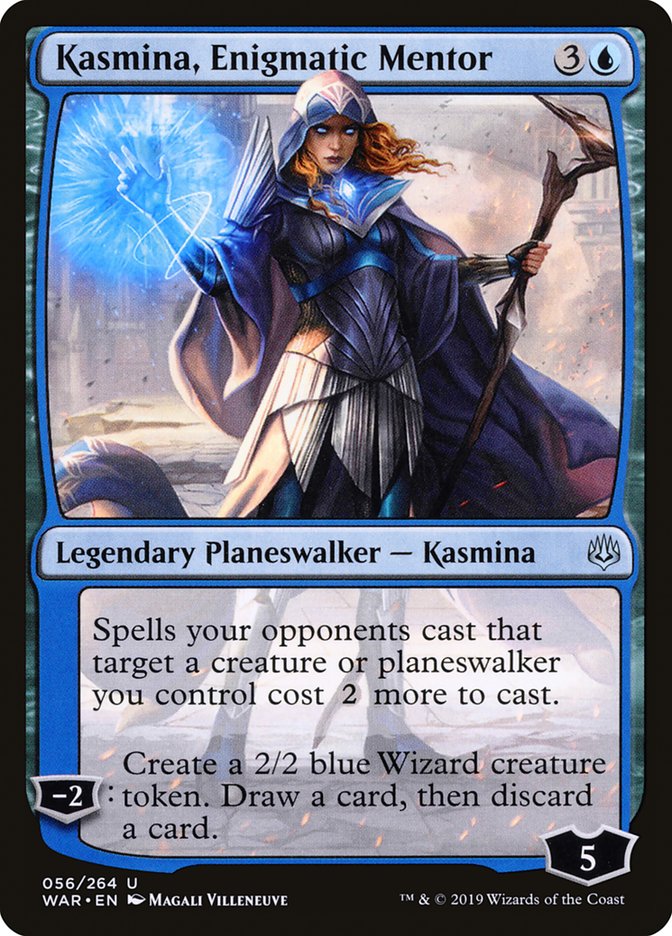
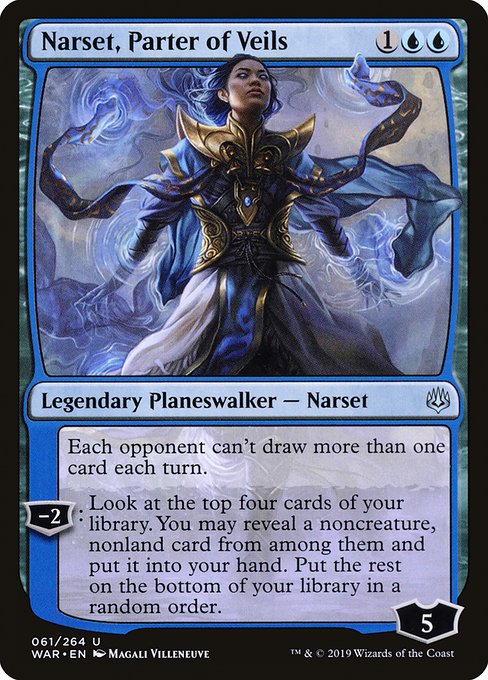
First is to check what Planeswalkers were desired most, and luckily for our purposes, Dimir had access to plenty of good ones. Any eternal format player is likely familiar with Narset, Parter of Veils. Ironically Narset, while still one of the better walkers in the format, wasn't the premier piece Dimir was looking for. Kasmina, Enigmatic Mentor takes that crown. The card frankly does everything: Filter cards, create bodies, protect itself and your other creatures and planeswalkers. Alongside these pure colored walkers, Dimir also had access to some of the best walkers in hybrid colors, Angrath, Captain of Chaos, Kaya, Bane of the Dead, Vraska, Swarm's Eminence, and of course Ashiok, Dream Render were some of the highlights there.
Second is to confront the fact that two of Dimir's enemy colors, in particular green and especially white, were simply below the bar for WAR's limited format. Part of this was due to the disparity between the two major mechanics introduced in War of the Spark and their assignment to each color. Green and White, (and Blue as a tertiary) were the colors of Proliferate, where whenever it was triggered you got to choose any number of players or permanents with counters on them and increase that amount once. In the grander scheme of Magic, Proliferate is a well-designed, now evergreen mechanic that has appeared regularly since its introduction, but here it sat just below the bar. This is echoed by the data as well. At common, only one card, Law-Rune Enforcer, between both white and green made it into the top 20 of the set.
Part of that was perhaps due to the mechanic requiring a lot of you; casting a spell, with a permanent in play, with a counter that you want to add, to only a non-outstanding benefit was maybe a bit much to ask, but it was also because it was simply outshone by the mechanic granted to the Grixis colors: Amass.
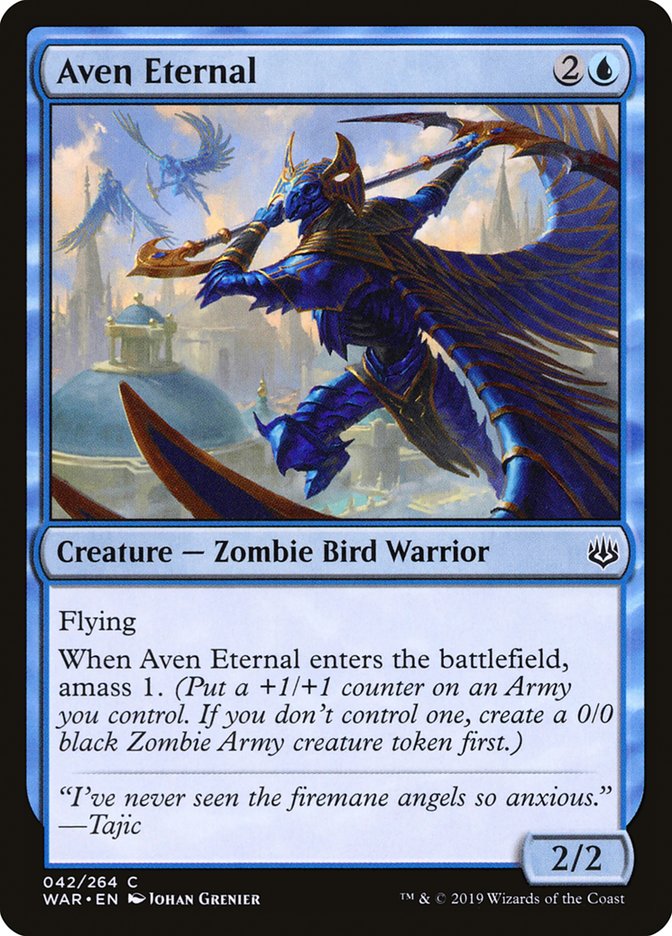
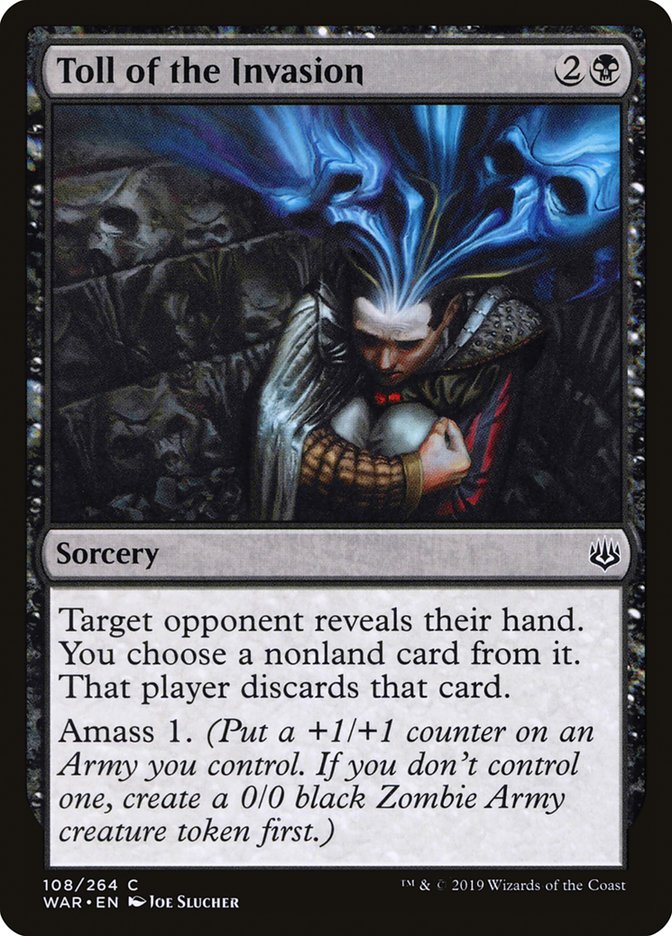
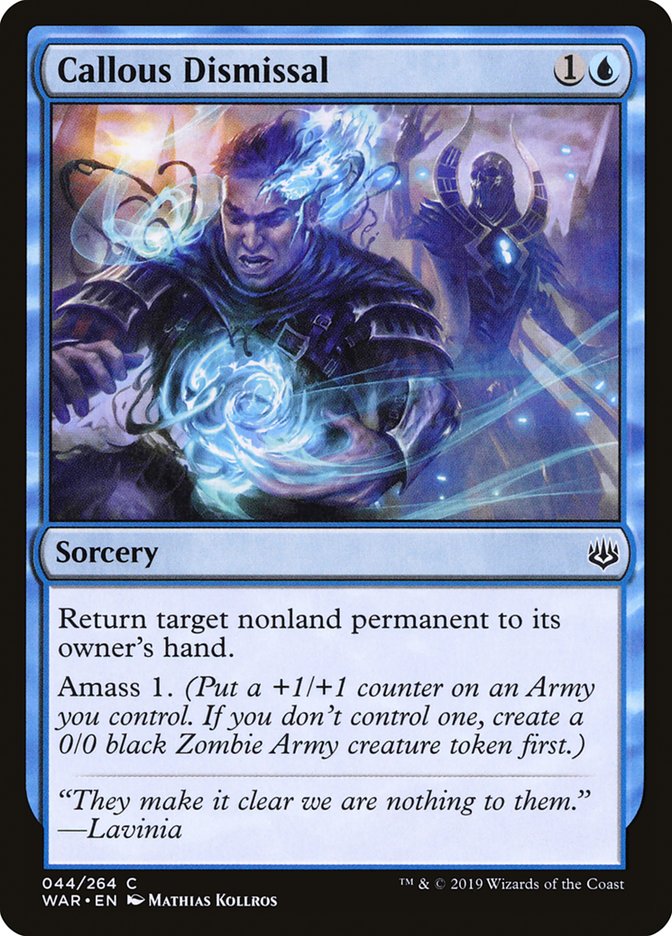
For those who are maybe not familiar with the more obscure of War of the Spark's core mechanics, whenever a player triggers Amass X, they create a 0/0 Zombie Army token if they didn't already control one, and then put X +1/+1 counters on that creature. Rather than most other token strategies that focus on going wide and flooding the board with many tokens, Amass prompts the player to grow tall, continuously growing a massive threat that eventually must be dealt with.
For limited, Amass was easily the best thing to be doing in the format outside of slamming mythic rare planeswalkers. Any card with Amass tacked onto it essentially was a 2-for-1 in cards, either beginning the chain on the Army token or ticking it upwards into need-to-deal-with territory as quickly as possible. Much like NEO, Amass presented to drafters on the other side of the table another tough lose-lose situation. Removing the Army token, possibly with premium removal, only for the chain to begin again with the next Amass spell played while also leaving behind bodies on the board like a Lazotep Reaver meant it never felt amazing to deal with the issue.
Dimir Amass claimed quite easily the top three commons in the format in Aven Eternal, Toll of the Invasion, and Callous Dismissal. Eternal was a pesky 2/2 flier that brought along an extra 1/1 in stats, something we often see in most sets common slots with a power knocked off, and Amass pushed it to being the best common in the set. Toll of the Invasion was the perfect disruption piece in a grindier format that looked to pick hard to remove pieces like planeswalkers and the mythic God-Eternal cycle, whose return to deck death clauses made picking them off from your opponent's hand the best way to deal with them. Callous Dismissal was ironically one of the best answers in the mirror for picking off an opponent's army cleanly, and perhaps became so good of an answer in the matchup that in Amass's return in Lord of the Rings, the 2 drop blue bounce effect of choice, Soothing of Smeagol, specified 'nontoken'.
While Amass was spread around to red as well as blue/black, Dimir also had the benefit of two of the strongest multicolored cards in the set at their rarities. Tyrant's Scorn is about as flexible of a removal spell that you could ask for, and Enter the God-Eternals did basically everything you could ask of a splashy game-ender in a grindy format like WAR's. Red was also pulled towards the typical spells-matter archetype in Izzet, meaning of the three Amass colors it lacked the depth of black and the flexibility of blue.
The numbers show fervently that Dimir was the place to be, and the talking heads agree in hindsight. 17lands show Dimir piles at 1.3% better than the next best contender in the field, and I'm inclined to agree that the dominance shows. Michael Longsmith chimes in again to highlight the options at the top end of Dimir's rarity, in specific Liliana, Dreadhorde General, as some of the best limited bombs ever printed. Limited Level-Ups adds on that the format was grindy enough that Blue holding up interaction in No Escape, or card selection in Tamiyo's Epiphany was a great place to be in. Altogether, this is a format that Dimir, in an adjective that we love to see, was dominant in. Saddled with the better mechanic, the best cards at lower rarities, great interaction, and some of the best bombs ever seen, it's hard to pick holes in Dimir Amass's case for our cube. Speaking of..
Dimir's Dilemma
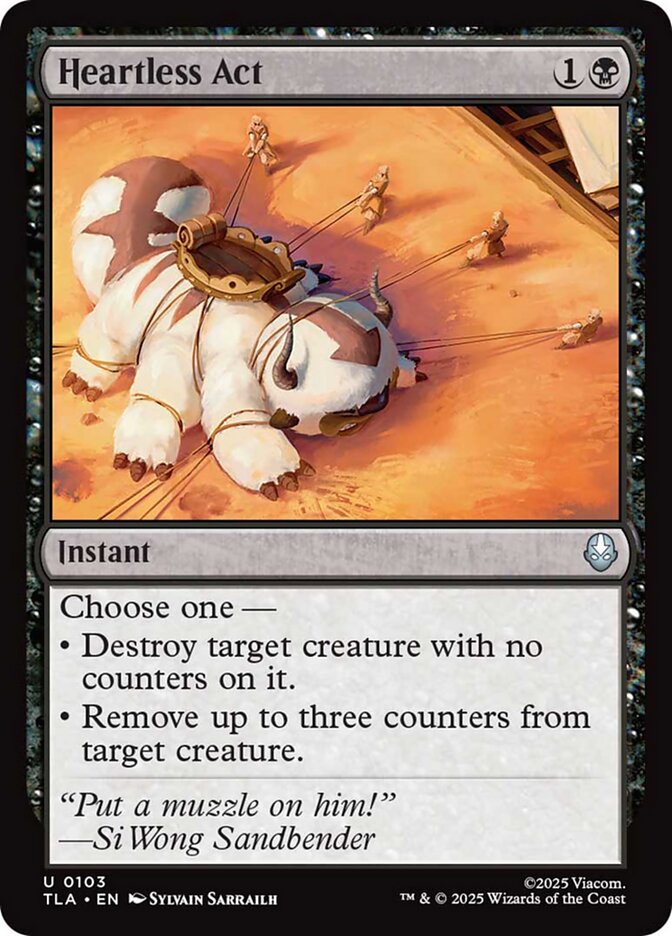
We are now forced to choose between our two favorite children and decide who will represent the Dimir in the Hall of Fame Cube, Ninjas or Amass. Full transparency, I think Ninjas is the way cooler option, and it was a pleasure to write and research about. The interactiveness of the gameplay, the mind games you force your opponent into, as well as enchantment and bounce synergy with our previous entrant with Azorius in blue to boot would all make for great gameplay in our cube. But the one major knock against NEO is quite literally only one for our specific purposes: the set was just too well balanced. Ninjas was the best deck, but not by a lot, there were plenty of viable strategies going on in NEO that were chopping away at its first place pedestal. After all it only came into consideration both at only 0.2% above the next contender and by explaining away the mono-red mirage.
Amass on the other hand, I am having a much harder time poking holes in. It had essentially very little competition as the top dog, it had the best cards up and down the rarity slots, and it dominated the winrates. While Kamigawa: Neon Dynasty is considered a great, albeit not perfect, limited environment, War of the Spark is a much more contentious and controversial memory for a lot of players. I posit that one of the main reasons fueling this was because Amass was so damn good, and Dimir was the best iteration of it.
This was an extremely difficult decision to make, and I could very well see arguments for going the other way, but for the above reasons, and to set a precedent of listening to my head over my heart, I have decided to go with War of the Spark's Dimir Amass as our archetype of choice.
For construction, we are making the (hopefully) one-off exception of including non-strictly Dimir cards in our Dimir section, as Angrath, Captain of Chaos and Vraska, Swarm's Eminence will be inclusions, both to synergize and emphasize our Amass strategy and to give an accurate representation of what Dimir decks could play in War of the Spark. Both will be listed under the mono-black section for now. Other important notes in inclusion are Spark Double, an all around all-star of a card that can fit in practically any shell, some of blue's better proliferate cards that Amass would be more than happy to play with like Contentious Plan, and Augur of Bolas as a spells-matter card that also happens to find some of our best cards.
That just about wraps it up for Dimir, be sure to tune in next time to see the discussion of Rakdos. Be sure to comment what you thought about this week's formats, our selection, and your thoughts on who should be our representative next week!

Comments
Post a Comment