The Hall of Fame Cube: White Stripes and Melodic Blues (Azorius)
You can find the current iteration of the Hall of Fame Cube at https://cubecobra.com/cube/list/HallOfFameCube
A Short (Yet Long) Introduction
In the entire timeline of Magic the Gathering, there is perhaps no one format so beloved yet frustration inducing then Limited. The thrill of opening a bomb rare that fits perfectly into your speculated lane. The scornful embarrassment of the inescapable 0-3. We've all been there. Perhaps it is Magic's cruelty as a mistress that keeps us tantalized, enough to throw another set of gems down the well to do it all over again at least. In each new set, designed at least in part for the draft environment, some archetypes rise above the rest. Whether it be the irresistible nature of its rares, or the synergy and above rate effects you can find in a color's commons, each format will offer players a selection of archetypes to draft from, yet not always cut of the same cloth.
In this cube, the minimum cloth we accept is satin and silk, the best of the best, the glitter among all the gold. This cube means to explore the peaks of that dominance, and pair them up against their greatest competitors. The greatest two-color archetypes are put together in one set, one cube for a magical showdown of epic proportions. Who will remain on their streak of utter domination? And who will be exposed as the dregs among the chosen few? All remains to be seen.
This blog is the one stop shop for the insight, design philosophy, and short history behind the choices made for the Hall of Fame Cube. This cube is the answer to a question that (perhaps) has yet to be answered in the annals of cube creation: What if we took each two-color pair's strongest limited archetype and put them all together in their own draftable environment?
This time we examine the first of the ten, the law above and controllers below, the Azorius. Perhaps one of the most difficult archetypes to examine and one that presents to us issues on how we proceed with the cube further. The history of Azorius in the modern limited era is a fascinating one, all of which can be found below.
White Stripes and Melodic Blues
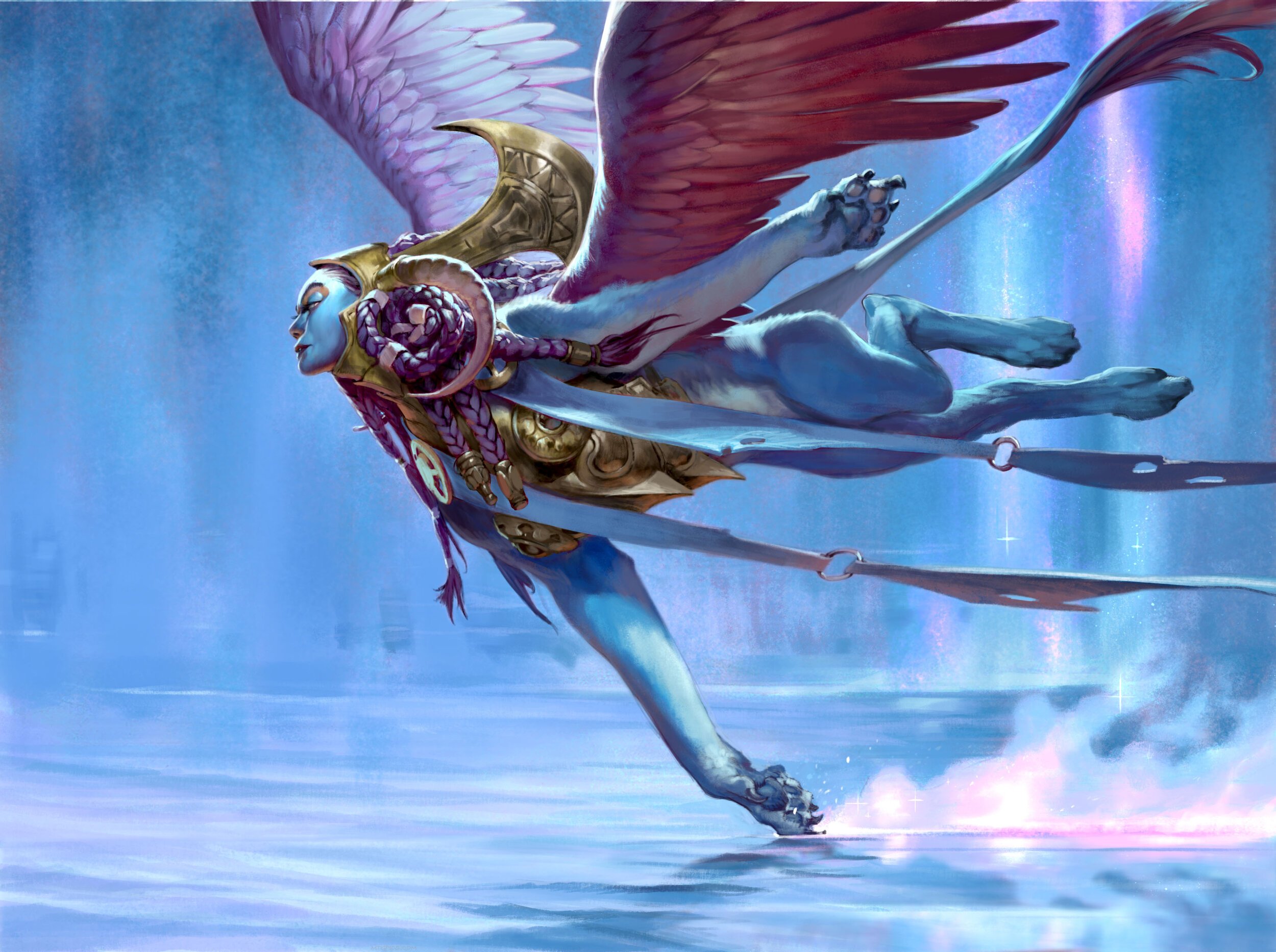
Dream Trawler by Jesper Ejsing
Azorius is, in and of itself, a microcosm of the various issues that plague this cube's decision making. There are several factors in play at which the final decision, which set of cards most encapsulates our cube's main goal, will be derived from.
The first is of course the hard data. 17lands is perhaps the most important resource for our delineations, as it maps out to us the hard numbers crucial to us in our pursuits. Offering us the comparisons of the winrates between archetypes as well as the best performing cards by winrate all within the same set are some of our best examples of concrete evidence we have to defining 'the best'.
The second is the magic community itself. From invaluable examinations of the format by figures such as LSV and Marshall Sutcliffe on their Limited Resources podcast, to the work done by the various Magic Arena content creators done on youtube, to the articles that can be found across the sphere of Magic by writers such as Michael Longsmith, marrying the interpretations of the format by some of the best who were there to actually draft it with the hard numbers will give us the clearest interpretation of what set actually deserves to reign supreme over the magic landscape.
The Data

Above we have a graph showcasing all of the available data sets since the inception of 17lands. On the horizontal axis we have the winrate of all Azorius archetypes in mainline (non-remaster or smaller) sets. This one is easy enough to understand. The further to the right you are, the more games you have won versus lost.
The vertical axis is what I'm calling the win delta, this is taking the winrate of each Azorius set, and comparing them to the winrates of all other archetypes of enough sample size within that set. If you were above 0%, then you were the best performing archetype of that set available within the data. If you were below, you were somehwere in the middle of the pack. Bloomburrow, for example, sports a 52.6% winrate, definitely on the lower end of all the available iterations of Blue/White in draft. This philosophically matches up with their win delta, which shows they performed 3.3% worse than the best performing archetype of the set, narrowly won out by Selesnya.
The data here shows some interesting trends that will largely hold true for this series. One is that there is a positive relationship between winrate and win delta, which tracks. The more you win the more you typically do well against the rest of the field within your set. The second is that the real candidates for our cube sit above the 0% line, it's really hard to justify making your archetype the best when you weren't statistically even the best of your own set.
The Clash of Icons
The data set here leaves us with a choice largely between two different archetypes, both the front runners of their respective axes. Core Set 2020 leads the way by a wide margin in winrate, being the only one to crack over 60%. However, it sports a 0.6% win delta, one that, while significant, leads some left to be desired when searching for true dominance. The other end of the spectrum is Theros Beyond Death, whose 59.2% winrate puts it highly enough for a dwarfed second place, yet double M20's win delta to 1.3%. It is our job to then decide, by factors outside of the numbers, which is the right direction to go in? Both sets have cases to make and good ones too, so looking beyond the data and into the more abstract interpretations of these two sets, and Magic as a whole, will help decipher this better.
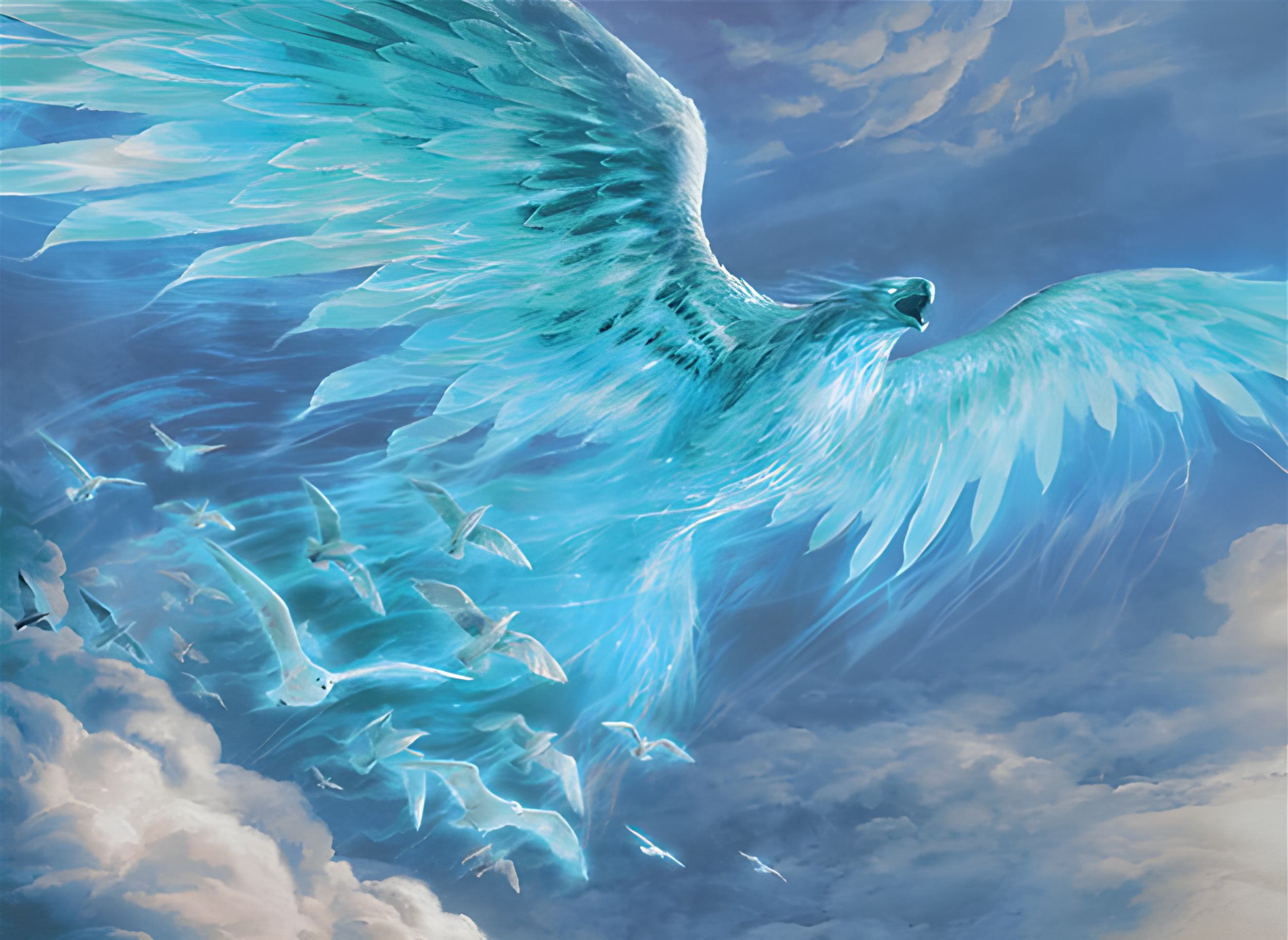
Empyrean Eagle by Jason A. Engle
There is perhaps no other evergreen keyword in the history of Magic the Gathering that has a greater association with the guilds, as Flying does to Azorius. Ciel Collins pointed out in their analysis of draft archetypes from 2012 to 2024, that a staggering 10 Azorius archetypes were flyers. Flying is the premier evasive mechanic in Magic the Gathering. Its strength is identifiable early on by players just beginning when they first swing in with a Wind Drake for the first time in their beginner box, and are key elements of cards that define Magic as a game, case in point Serra Angel. As one astute redditor pointed out, it's the only evergreen keyword that necessitates the existence of another, simply to counter its strength. Reach does, in and of itself, essentially say "blocks flyers".
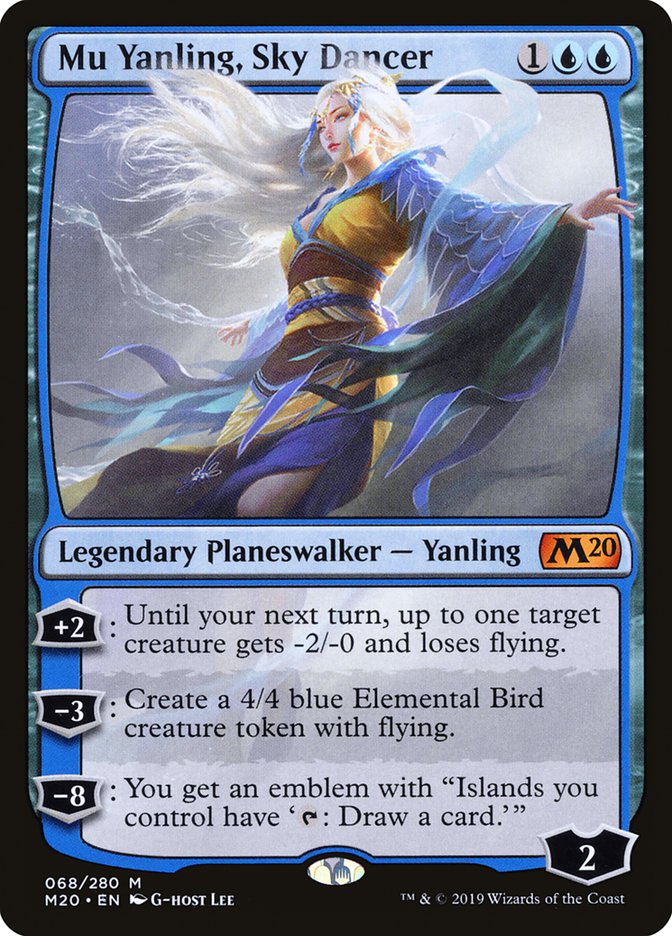
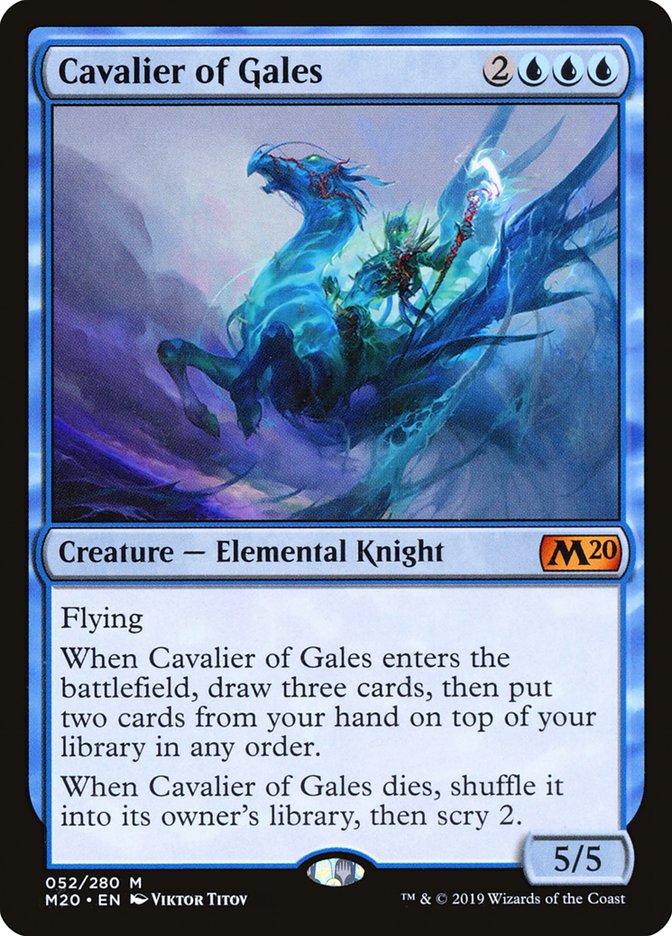
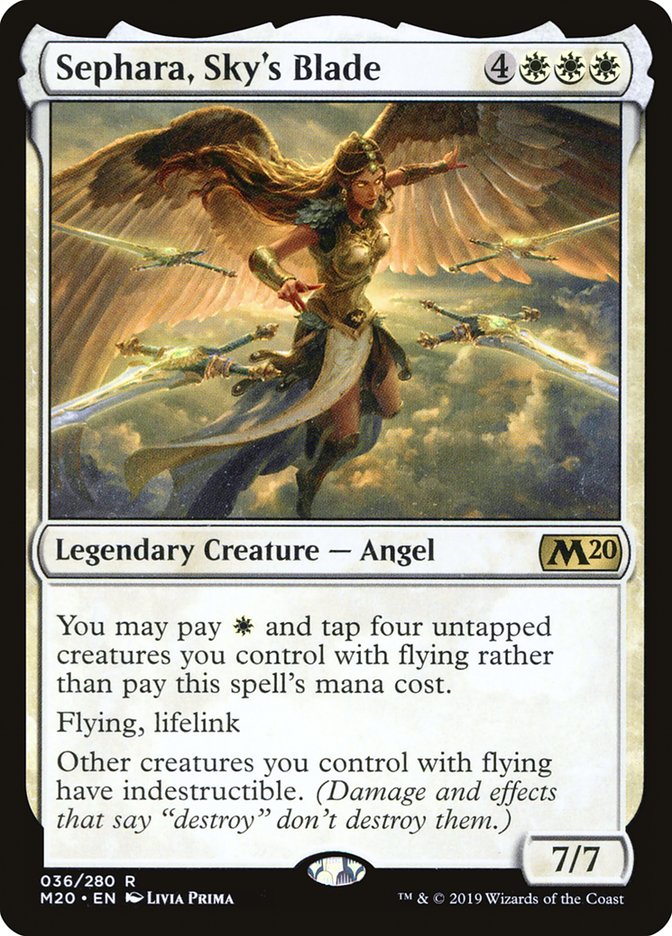
Magic Core Set 2020, released in July of 2019, realized the mystique of one of Magic's most elegant mechanics and fulfilled it with bombs that rang up and down the stat sheet. Three of the top 10 cards in the format, as rated by Mythic drafters at the time, including spots 1 and 2 were all suited perfectly for the Azorius flyers deck. Mu Yanling, Sky Dancer was the best in show, offering unbeatable value with likely a 4/4 flyer on turn 3. Cavalier of Gales took the second spot, a 5/5 flyer for 5 that Brainstormed for you on entry and gave you some extra top deck manipulation on the way out was extremely hard to beat. Sephara, the Sky's Blade rounds out the top 10, being able to cheat your wincon out for just one mana convoking 4 was incredible value. The available 17 lands data also backs it up, as the two premier commons of the set turned out to both be cantrip mono blue flyers in Faerie Miscreant and Cloudkin Seer.
M20's main argument is being one of the premier versions of the premier identity in Azorius. It would be impossible to consider any Azorius archetype without giving a nod to one of the most important and impactful keywords in Magic history at its highest of heights. However, this cube isn't simply just devoted to the iconic; the Hall of Fame requires dominance. Dominance that, in and of itself, can cause the common drafter to mourn the loss of what would other wise be an amazing draft format. Dominance that is identified and lamented across the community as the menace to shovel draft frustration onto. Dominance that is so potent that one card can completely upend and entire set's limited environment of Magic the Gathering.
Dreams and Nightmares
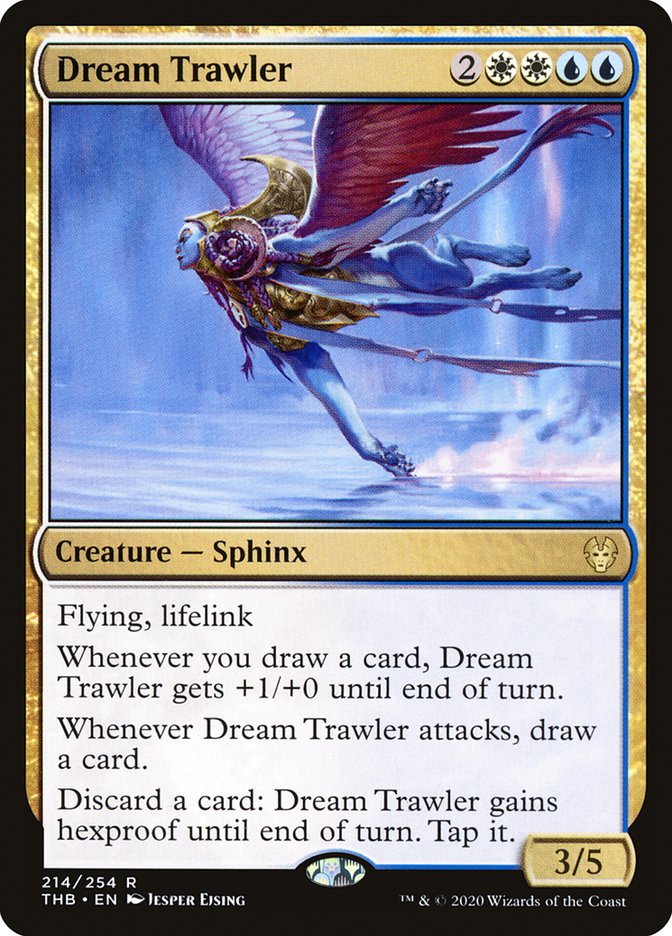
At Magic World Championship of 2020 in February of 2020, just one month before the world shut down to the pandemic, 8 Theros Beyond Death drafters were firing off Draft A to decide the limited section for the day. One Thoralf Severin drafted through pack 1 with a solid fleet of black and red cards.
That was until he opened a Dream Trawler in pack 2.
Severin was up against a wall in his draft. On one side, he was battling with Ondrej Strasky, who would end up in mono-red, over one of his core colors. On the other, Autumn Burchett was already sitting in an Azorius shell, one who would roll out a red carpet for a chance at the bomb in Severin's hands. The choice had to be made on which lane to fight in, either with Strasky over the already contested red, or start a completely new one with Burchett over Azorius. Ultimately, Severin chose the latter, remarking what I believe many drafters would think when presented with an opportunity like that, "It's a really good card so obviously I wanted to play it..."
Severin's draft didn't end up where a player of his caliber would like to be ideally, pushed into the lower brackets with a perhaps too thin Azorius deck with a black splash. But his sentiment rings true to what everyone in the format had ascertained: Dream Trawler is a really good card.
Like stupid good. Like insanely not okay levels of good.
6 mana for a 3/5 flying (heh) lifelinker is already solid enough if not already good, but thats before even considering its three other abilities. The card buffs itself, draws you cards, and protects itself using the value it already generated. Essentially the card stabilizes you, is an engine, is great beatdown, and is extremely hard to remove. That sounds good enough to upend a World Championship draft to me, just imagine this card earlier in its production life where it had a fourth ability.
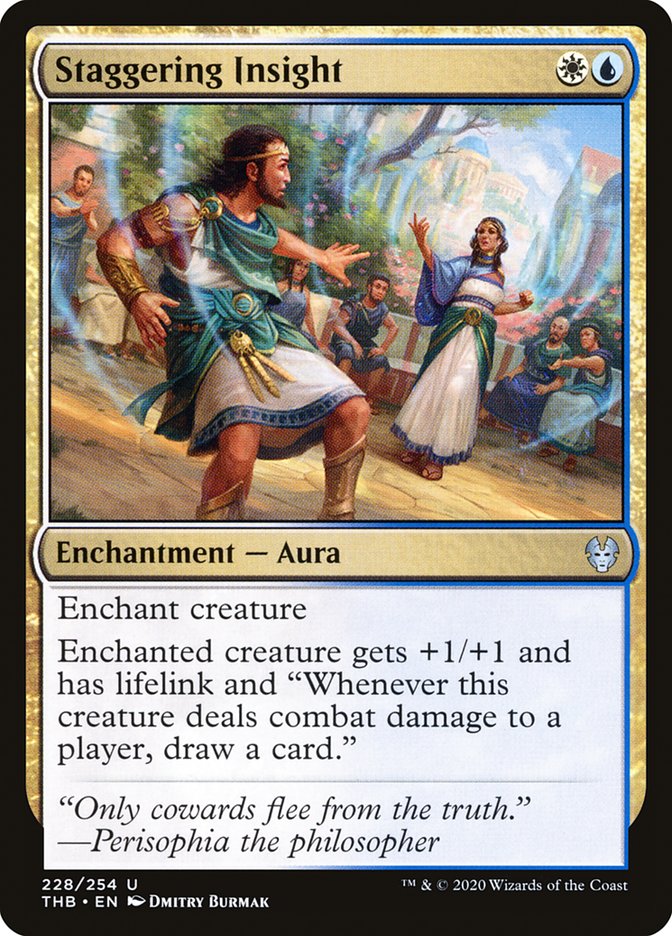
But, as Michael Longsmith puts it, "good rares don't necessarily equate to being the best color pair..." As true as this rings, Azorius didn't just have good rares, it had three of the four best rares in the entire format, adding on the enchantment engine Archon of Sun's Grace, and the also nigh unbeatable Kiora Bests the Sea God. Moving down the ladder Azorius had similarly great options, Staggering Insight was the best signpost in the set and had a top-performing common in Heliod's Pilgrim to fetch it. The grindier format also allowed for blue's counter magic to shine in Deny the Divine and Memory Drain.
The strength of Trawler and Kiora Bests the Sea God, alongside a limited environment set up for Azorius to thrive in made its archetype truly dominant. It outclassed every other archetype by 1.3%. Players were quick to call out the insanity of the card early on, and then lamented its return later on in flashback drafts. This is exactly the type of salinity that the Hall of Fame Cube is looking for. This cube demands dominance on a scale that transcends the limited space, and puts the archetype in the scope of Magic as a whole. Longsmith reflected back on the power of these rares in his article for Cool Stuff Inc with this in mind, calling Trawler and Bests as "among the best limited rares of all time". I wholeheartedly agree, and believe that THB's iteration of Azorius is the correct choice for the Hall of Fame Cube.
Putting it All Together
Before we officially crown our kings of the Azorius, we have to make important decisions about how exactly our cube is going to look. Assuming that this is, in theory, a cube consisting
Now that we've decided on our Azorius representative, we are met with the challenge of implementing it into our cube. One is deciding who gets in, who goes, and who gets to say. Some picks are obvious, the aforementioned Dream Trawler and Kiora Bests the Sea God are our should-be-mythic and mythic bombs. Archon of Sun's Grace sets up our enchantment focus nicely. Staggering Insight is our signpost, and perhaps best in all of THB, uncommon.
Beyond this however, is where it gets a bit murky. Exactly how much from each of the colors can we take? How much can be considered a direct member of the Azorius archetype rather than just a good card for multiple? Take Dreadful Apathy. A premier enchantment removal spell that fits perfectly within what Azorius is trying to do, but any deck running white is happy running the pacifism effect with the potential for the exiling upside. So is it disingenuous to put this in our Hall of Fame archetype when it perhaps could have shined just as bright or even brighter in other archetypes?
It's here that we must begin using our discretion and resources to settle these kinds of disputes. Trophy decks of the time, analysis by verified high-tier Magic players and content creators, voices from the magic community at large to some degree, as well as articles of the time all prove useful in enlightening what our choices should be.
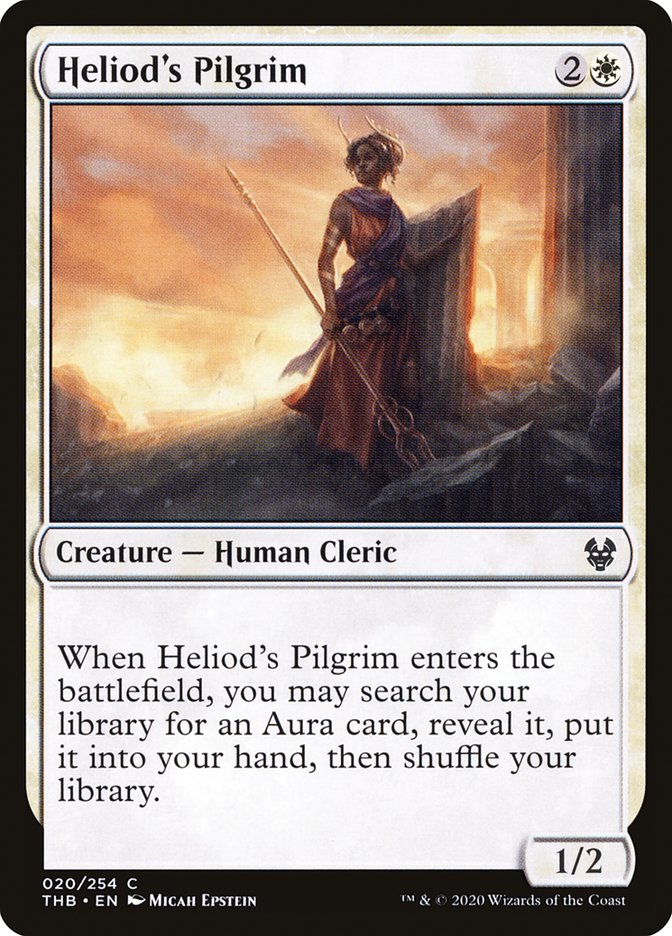
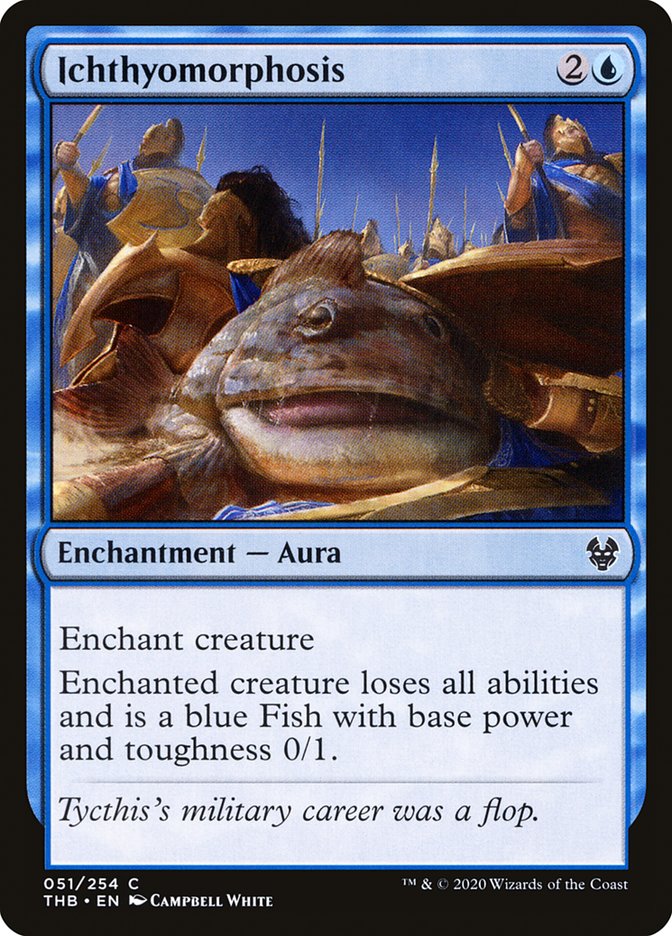
Michael Longsmith's article will help us suss out the proper inclusions based on how the strategy performed at the time, with his honorable mentions going right in for us. Heliod's Pilgrim is one such card that sticked out, tutor's at common are both (ironically) rare and often overcosted, but here the Pilgrim often finds the best Aura in your deck plus a body to stick it onto in a pinch. In our cube it will often fetch a key removal piece or Staggering Insight to get the ball rolling. As a result, the best inclusions for us will likely be some premier aura based removal to create a more grindy, bordering-on-control archetype, right on brand for Azorius. Dreadful Apathy has already been mentioned, but the impossible to spell Ichthyomorphosis is also a great inclusion.
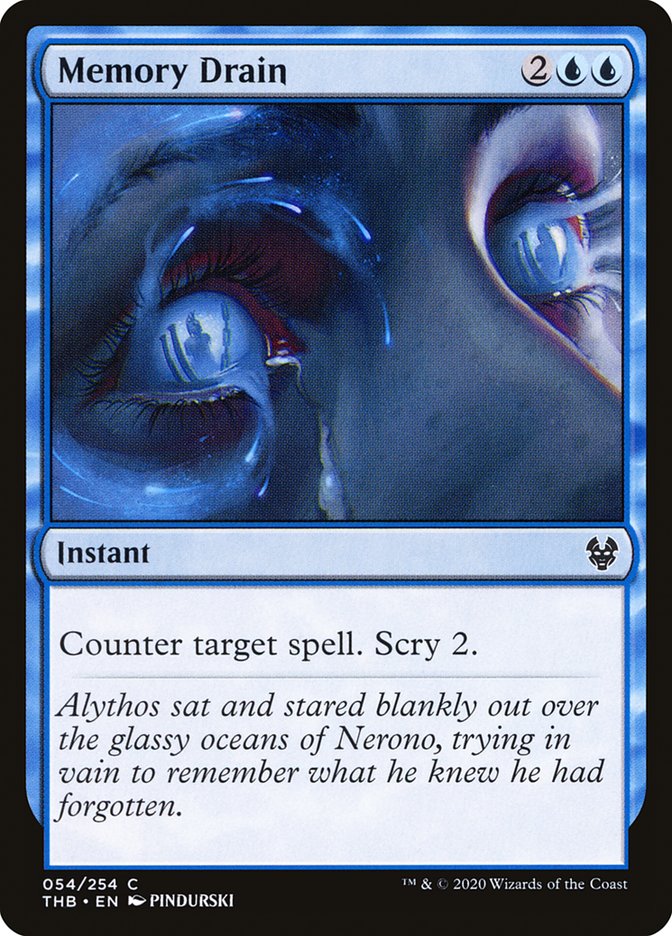
One inclusion that I'm personally curious about is Memory Drain, a card Longsmith makes note of as one of the last times a 4-mana counterspell was not only good, but very playable. Most Azorius players were happy to play it in the slower format of Theros Beyond Death, but how will it perform in our cube? One side of me thinks that our speed may price this card out, but another side thinks that the more premier and sticky our opponent's cards are on average, then the better our counter magic gets. It's just one of many axes that I think makes our cube so interesting, seeing how cards that were perfectly suited for their own draft environment perform in a best-in-show setting.
To round it all out, we have opted for some of the sets Flash/Instant Speed synergy pieces to play well with our counter magic, flash enchantments, and other instant speed tricks. Stinging Lionfish and Naiad of the Hidden Coves are some of the most honorable mentions from this category. And of course, no THB archetype would be complete without inclusion of the bomb mythic rare gods, so Heliod, Sun-Crowned and Thassa, Deep-Dwelling make appearances here, although I anticipate them to be the bombiest of bombs that will be found in any deck in their colors rather than specific to the white-blue mages.
This wraps up our write-up on the Azorius archetype for the Hall of Fame cube. We ended up in a slightly more blue leaning assembly of cards, 40/28/3 ratio of Blue/White/Multi. But please feel free to let me know what you think should be included and what I could have missed! This cube is very much in flux and very open to critique, so feel free to make them! Once again, you can find the current iteration of the cube at https://cubecobra.com/cube/list/HallOfFameCube, and stay tuned for our look at the Dimir next time!

Comments
Post a Comment